
- Most Highly Rated
470+ google reviews - Top Rated Reviews


Last Update
The wait for a spouse visa is one of the most trying emotional periods of one’s life. It is not only a matter of time; it is also a question of living together. In 2026, the duration of spouse visa processing time in Australia 2026 differs according to applying onshore (820), offshore (309), or through the prospective-marriage channel (300). It is essential to manage expectations concerning timelines, to understand what the two-stage process involves, and to know what actually delays couples. We will explain: partner visa 820 vs 309 processing time, compare 300 visa processing time in Australia, and discuss factors influencing timelines, as well as how to plan your application. At Parish Patience Immigration Lawyers, we have helped many couples through this process. Let us assist you in getting a clearer picture of the road ahead.
One of the first things that will come to your mind is that partner visas are not a one-off affair. Understanding the two-stage process alters your perception of the wait completely.
1
The grant mentioned here is the very first one to permit couples to cohabit (or, in some cases, wait) until the relationship ends.
2
The second stage becomes available about two years after you submitted your application for the temporary stage. It is at that time that you will obtain permanent residency, provided that everything is still genuine and ongoing. The waiting period varies greatly from case to case (typically 11-30 months).
The Department of Home Affairs has a reason for imposing the two-stage system: They want to be certain that your relationship is real and not just a matter of quick entry for visa purposes. The truth is, you submit your application for both stages at once. The temporary stage is evaluated first (sometimes 9-26 months, depending on subclass), after which you wait about 2 years, then the permanent stage takes place.
This is what it means for you: If you take the 820 onshore route, you and your partner might get to be together in Australia quickly (thanks to the Bridging Visa), but you’ll still have to wait for the permanent 801 stage.
Here’s a breakdown of what you can expect in 2026 for the main partner visa pathways:
| Visa Type | Where Applied | Temporary Stage | Permanent Stage | Total Timeline (Approx) |
| 820 (Onshore Partner) | Inside Australia | ~12-26 months | ~11-30 months | ~2.5-4+ years |
| 309 (Offshore Partner) | Outside Australia | ~9-13 months | ~13-32 months | ~2-3.5 years |
| 300 (Prospective Marriage) | Outside Australia | ~12-26 months | Then transfer to 820/801 | ~3-4+ years |
Stage 1 (Temporary): In 2026, you should expect around 12-26 months, with 16 months being the most common. Some references even state that 50% of applications are processed in about 14 months and 90% in 20-30 months.
Stage 2 (Permanent – 801): Becomes eligible after 2 years from the date of application. However, the processing time usually takes 11-30 months.
What is the reason to pick 820? You are going to be living together in Australia from the start, so there will be no need for separation, and the waiting time will be a period during which you can continue building your life. Illustration: In January 2026, the couple, Sarah (UK) and James (Aussie), applied for an 820 visa. By May 2026, Sarah was already on a Bridging Visa and had a job. In January 2027, they lodged a permanent visa application 801 and by mid-2027, she was already a PR holder. The total duration was around 2.5 years, but they were together just for 4 months.
Talk to one of our Visa Experts Now.
Stage 1 (Temporary): Initial processing is often faster and takes about 9-13 months, but the applicant has to wait overseas until the grant is made.
Stage 2 (Permanent – 100): After approximately 2 years from the initial lodgement, expect a waiting time of 13-32 months.
Why choose 309? There is a chance of getting a faster initial decision.
Disadvantages: You will be separated for several months, the applicant will not be able to work in Australia during the wait, and the move will be postponed.
Example: Marco (Italy) and Anna (Aussie) lodge 309 in January 2026. Marco is in Italy, waiting for about 4 months until being granted a temporary visa. They submit 100 in January 2027 and receive it in late 2027. In total, it will take around 3 years, but the separation will be of 1.5 years or more.
What it is: It is for couples who are engaged but still not married. The applicant comes to Australia on a 300 visa, marries the partner, and then applies for 820/801.
Processing: The temporary period lasts 12-26 months; couples must marry within 9 months of the visa being granted. Then they can apply for the onshore (820) visa and complete the remaining process.
Total timeline: A total of about 3-4+ years for 300 grants + 820 + 801.
Why choose 300? It is perfect if you are not eligible for the de facto path yet and want to have your wedding in Australia.
Example: Priya from India and David, an Australian citizen, are engaged, and they apply for a 300 visa. After approximately 16 months, the visa is approved, Priya travels to Australia, they get married and then apply for the 820 visa. By 2027, both will be PR. The total time is about 3+ years.
Waiting is quite annoying, and therefore, numerous couples inquire as to the reasons behind the long wait for a spouse visa. The following are the main factors that affect the duration of your process:
A comprehensive application that is ready for a decision will be processed faster. Lack of or incomplete documents will cause RFI’s (Requests for Further Information), which could take weeks or even months to resolve.
The state of the files, the quality of the scans, and the correctness of the translations are all factors that play a role. When the case officers do not have to sift through chaotic files, the decision-making process is faster.
The Department scrutinises shared finances, cohabitation, joint travel and real commitment. Little evidence or complicated international relationships usually take longer.
If the sponsor or applicant has had visa problems in the past, has had character issues, or has been sponsored before, extra scrutiny will be applied.
Routine checks are done quickly, but complicated ones (e.g., having multiple past residences or needing a third-country police check) may take weeks or even months.
Applicants from certain countries might have to wait longer because of the heavy workload at the embassy, high numbers of applications, or extra checks carried out.
The number of applications fluctuates, there are changes in staffing, and changes in policies; all those factors have an impact on the processing time.
Although the Department’s workload is beyond your control, your preparation is not. The following ways will help you to increase the likelihood of a hassle-free and quick process:
Professional help:
We totally understand that the waiting period is very hard. It’s all about recalling your togetherness, the next chapter you’re entering, and a visa delay seems to be an interruption. The following are ways to keep your feet on the ground:
For Onshore (820) Couples
You are going to be together quite early, and that is a plus! However, don’t wait for the visa to come through to start living together. So, plan for your move, work and living arrangements.
For Offshore (309) Couples
Being apart from each other is tough. Establish a communication system (consider different time zones, regular video calls), set up date goals (when will you meet again?), and a budget.
For 300 Couples
Probably, you are thinking of marriage plus migration. Fix your wedding date, and plan where to live after the wedding. Besides, waiting is just part of the journey to your final destination.
Practical mindset:
Never stop living your life. Do everything like working, saving, planning, and travelling if possible. The visa processing will be done in the background.
At Parish Patience Immigration Lawyers, we are experts in partner and spouse visas. We will evaluate your specific case, no matter if it’s 820 vs 309 vs 300, assist you in predicting the processing time for the spouse visa Australia 2026, manage your documents, reduce the waiting time and be there for you during the hard times emotionally. Book a meeting with us to discuss your timeline, plan, and the ways to steer clear of the pitfalls. We want to assist you in planning your life together, not merely the visa.
The processing times for spouse and partner visas can range from 9 to 13 months for the temporary stages and, in most cases, from 13 to 32 months for the permanent stages. The onshore 820 lets you meet earlier, whereas the offshore 309 could be quicker at the start but will keep you apart for some time. The 300-way brings marriage and waiting as another layer.
If you comprehend these timelines, you can not only plan your life but also rule out waiting. A delay does not imply failure, but rather that you have to be smart about your decisions.
 How the 482 Skilled Visa Works September 11, 2026
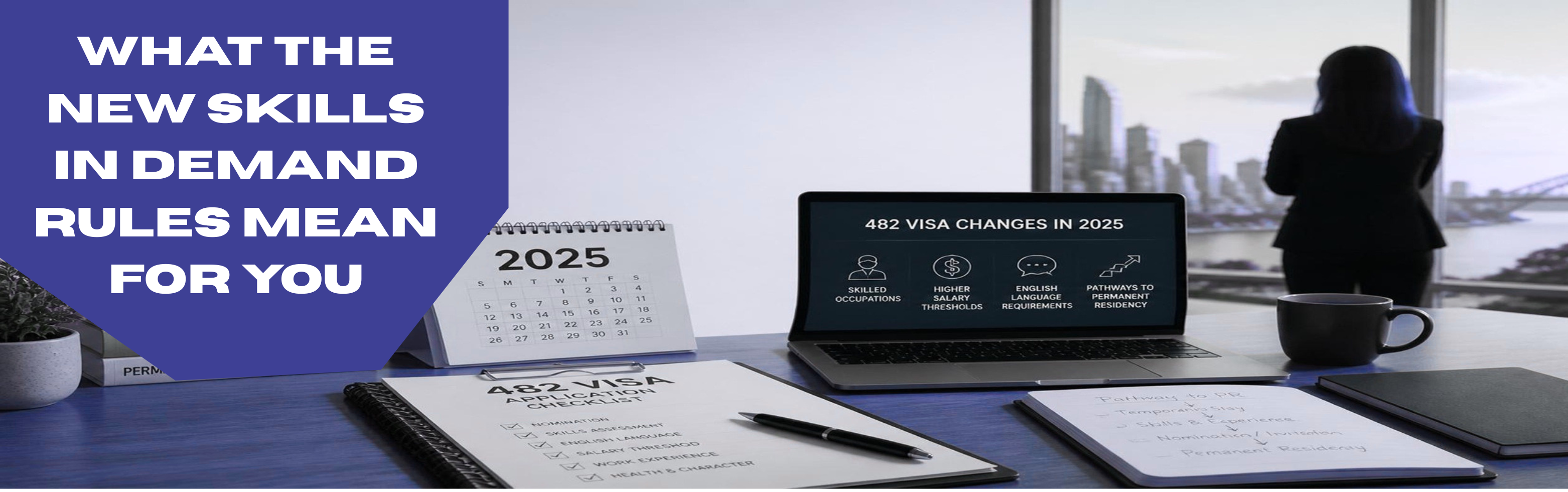 New 482 Visa Changes: What’s Different in 2026? July 28, 2026
 National Innovation Visa May 20, 2026
Our customers are always happy to share their thoughts with us.
Here is what some of them have said!

The team at parish Patience Immigration Lawyers were incredibly helpful throughout the application process. Their assistance made our lives so much less stressful and their expertise cleared up any confusion we had. They remained engaged with us the whole time and quickly responded to any questions with thoughtful, detailed answers. Special thanks to Usman Ali and Shan . We highly recommend the team at Parish patience immigration lawyer for anyone considering help regarding any kind of visa .
Highly recommended lawyers! Extremely professional and reliable service, with outstanding outcomes. A special thanks to Mr Thong and Marlene, for helping us with our difficult case. Not only did they ensure that everything was ready to go, but their professionalism came in favor when we were granted our visa within just under 6 months!
Thong and Marlene helped my partner gain permanent residency in Australia. We did the application ourselves but it turned out lots of information we needed to provide was missing. Thong and Marlene picked our case up and helped amend it. I really appreciate their help and guidance and look forward to contacting them again in the future. I am pleased by their efforts and professionalism.
Successfully handled my case. He had been prompt, caring and very professional in dealing with my case. I am glad to have received very strong support, guidance and service from them. I would highly recommend Parish patience immigration lawyers. I wish the best for their future prospects.
I’m really thankful for the guidance and assistance I’ve received regarding my Partner visa from Shan and his assistance Asha at Parish Patience. They handled my matter professionally and there were clear instructions from the beginning till end. I got my partner visa 820 granted in less than 7 months, thanks to their knowledge and expertise. I wish them all the best and highly recommend Parish Patience Immigration Lawyers for any sort of immigration matters.


